
Aluminium and uPVC can both make good windows. The useful comparison is how each material supports the proportions, opening sizes, finish and performance your project needs.
Appearance and proportion
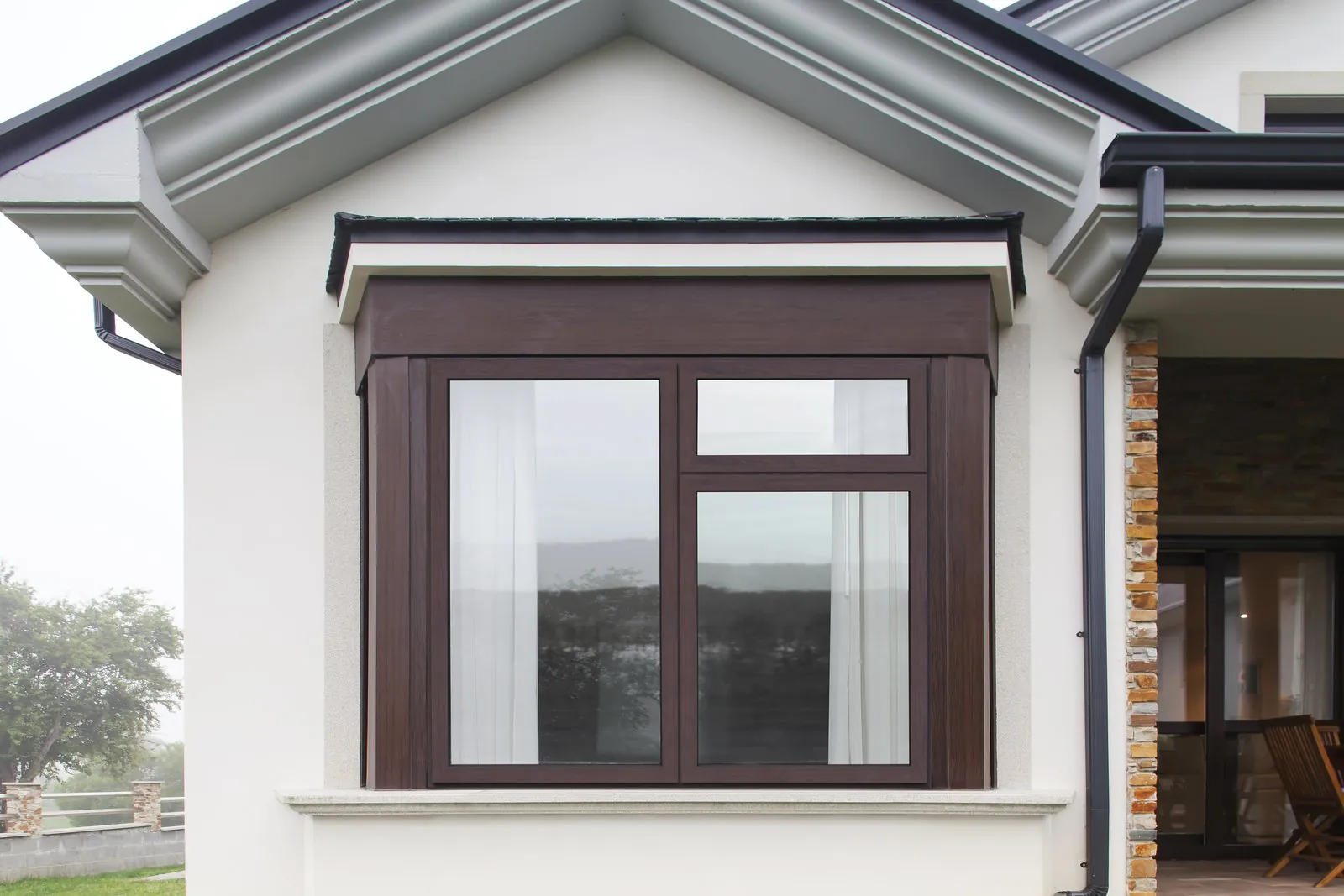
The most immediate difference is usually the frame. Aluminium can support slim, crisp profiles and larger areas of glass, which suits contemporary homes and extensions where the openings are intended to read as part of the architecture. uPVC frames are generally broader and have a softer moulded appearance.
That does not make one material right for every building. A replacement window in a modest opening may not benefit from the extra structural capacity of aluminium. Equally, a house with large panes, repeated mullion lines or matching sliding doors may look more coherent when the window profiles share the same material and finish.
Proportion is worth judging from outside and inside. Ask for elevation drawings showing fixed panes, opening sashes and visible frame widths. A sample corner cannot show how the complete window will divide the wall.
Strength, opening sizes and frame stability
Aluminium is strong relative to the size of the profile. That makes it well suited to taller sashes, broad fixed panes and projects where the window needs to align visually with aluminium doors. The exact limits still depend on the chosen system, glass weight, hardware and exposure.
uPVC works well across standard domestic window sizes. On larger openings it may need more substantial reinforcement or additional divisions. Those divisions can change the appearance and reduce the glazed area, so compare the proposed elevations rather than the raw opening size.
Ask for the actual proposed elevation. The number and position of mullions often matter more visually than a small difference in the headline frame measurement.
Thermal performance
Modern aluminium windows use a thermal break between the internal and external parts of the frame. This reduces heat transfer through the metal and allows a well-specified aluminium window to achieve strong whole-window performance.
uPVC is naturally less conductive, but performance cannot be judged from the material alone. Frame design, glass, spacer bars, opening configuration and installation all affect the final U-value. Compare the quoted Uw value for the complete window at the proposed size, not only the Ug value for the centre of the glass.
The current Virtus brochure lists indicative Uw values from 1.0 W/m²K for its slim casement platform and from 0.66 W/m²K for selected COR 80 configurations. These are system capabilities, not a promise that every window will achieve the same figure. Size and specification must be confirmed.
Finish, colour and maintenance
Powder-coated aluminium is available in a broad choice of RAL colours, textures and selected dual-colour combinations. A dark frame can be kept visually consistent across casement windows, sliding doors and bi-fold doors. The finish needs normal cleaning, particularly in coastal environments, but it does not require regular painting.
uPVC is also low maintenance and is available in white, coloured and foil finishes. Good-quality products can perform reliably for many years. When comparing darker or wood-effect finishes, look at physical samples in daylight and ask how the finish is formed and warranted.
Upfront cost and long-term value
Aluminium usually carries a higher initial cost. The difference reflects the system, fabrication, finish and the type of openings it can deliver. It may offer better value where slim sightlines, larger panes and a consistent architectural finish are central to the design.
uPVC often makes sense where the priority is a straightforward, cost-effective replacement window. A fair comparison should use matching glass performance, security, hardware, installation and aftercare. A low starting price is less useful if important items are added later.
Which should you choose?
- Choose around the architecture, not a material trend.
- Compare complete elevations and opening sizes.
- Use whole-window performance figures.
- Review physical colours and handle samples.
For a contemporary project with wide glazing, dark frames and matching doors, aluminium is often the natural fit. For standard replacement openings where budget is the main constraint, uPVC may be perfectly sensible. The better choice is the one that meets the building, budget and expected lifespan without forcing compromises elsewhere.