
Tilt and turn windows offer two opening modes in one sash. That flexibility can be valuable, provided the inward swing, hardware and safety details are planned for the room.
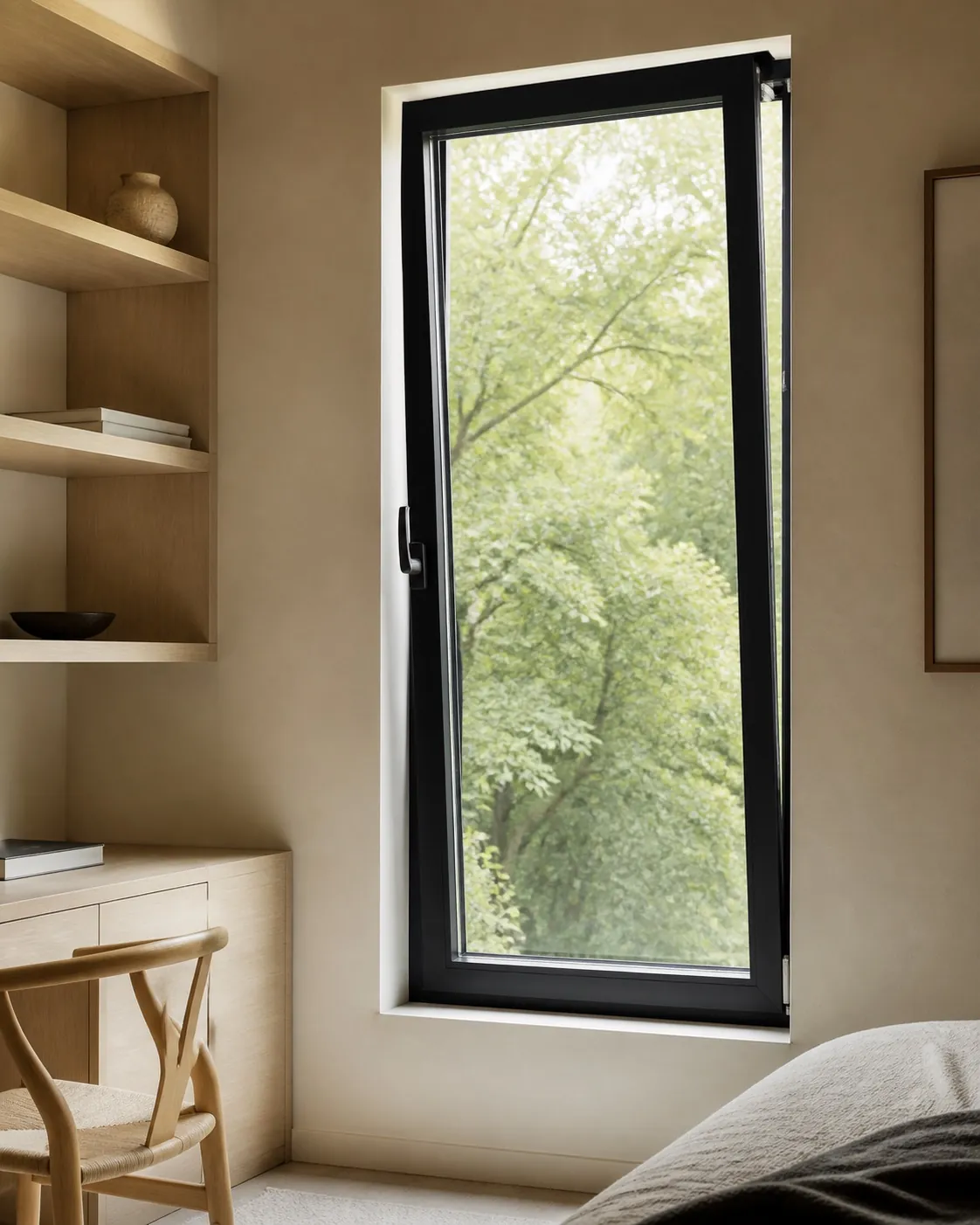
Two opening modes in one sash
A tilt and turn window uses one handle to control two movements. In the tilt position, the top of the sash leans inward while the bottom remains secured. In the turn position, the sash opens inward from the side like a door.
The sequence depends on the hardware, but the handle is normally moved between closed, tilt and turn positions while the sash is fully located in the frame. Forcing the handle when the sash is partly open can disengage the mechanism, so the operation should be demonstrated at handover.
Where tilt and turn windows work well
The format is useful where secure ventilation and easy access for cleaning are both important. Bedrooms, upper-floor rooms and apartments often benefit. The inward turn also avoids an open sash projecting over a path or balcony.
Check the internal space before choosing the full turn function. A wide sash needs clear room to open past blinds, taps, furniture and deep reveals. If that space is not available, a smaller opening sash or a different arrangement may work better.
Draw the inward swing on the floor plan. It is the quickest way to spot a clash with furniture, curtains or a worktop.
Ventilation, safety and weather
The tilt position provides controlled airflow while keeping the opening relatively small. It should not be treated as a substitute for project-specific safety measures. Rooms used by young children or vulnerable occupants may need restrictors or other controls, and any guarding requirements should be considered separately.
As with any open window, wind-driven rain can enter. The sash should be closed during severe weather or when the room is unattended. Background ventilation requirements also need to be resolved as part of the building design.
Frame design and concealed hardware
Modern aluminium systems can use hidden sashes and concealed hinges to reduce visual clutter. The current Virtus brochure includes COR 70 hidden-sash options with an indicative 66 mm sightline, and selected COR 80 configurations with enhanced thermal performance. Final sizes, weight and performance depend on the chosen system and glass.
Handle position matters on tall windows. It should be easy to reach without compromising the proportions of the sash. Ask to see the proposed handle, hinge arrangement and any restrictor rather than choosing them from a written schedule alone.
What to agree before manufacture
- Sash size and opening direction.
- Handle height, colour and shape.
- Whether hinges are visible or concealed.
- Restrictors and any project-specific safety requirements.
- Glass, ventilation and whole-window U-value.
- Clearance from blinds, furniture and internal finishes.
Tilt and turn windows are practical because they offer choice in use. They look best when that functionality is planned into a calm elevation rather than added after the fixed panes and mullion lines have already been decided.